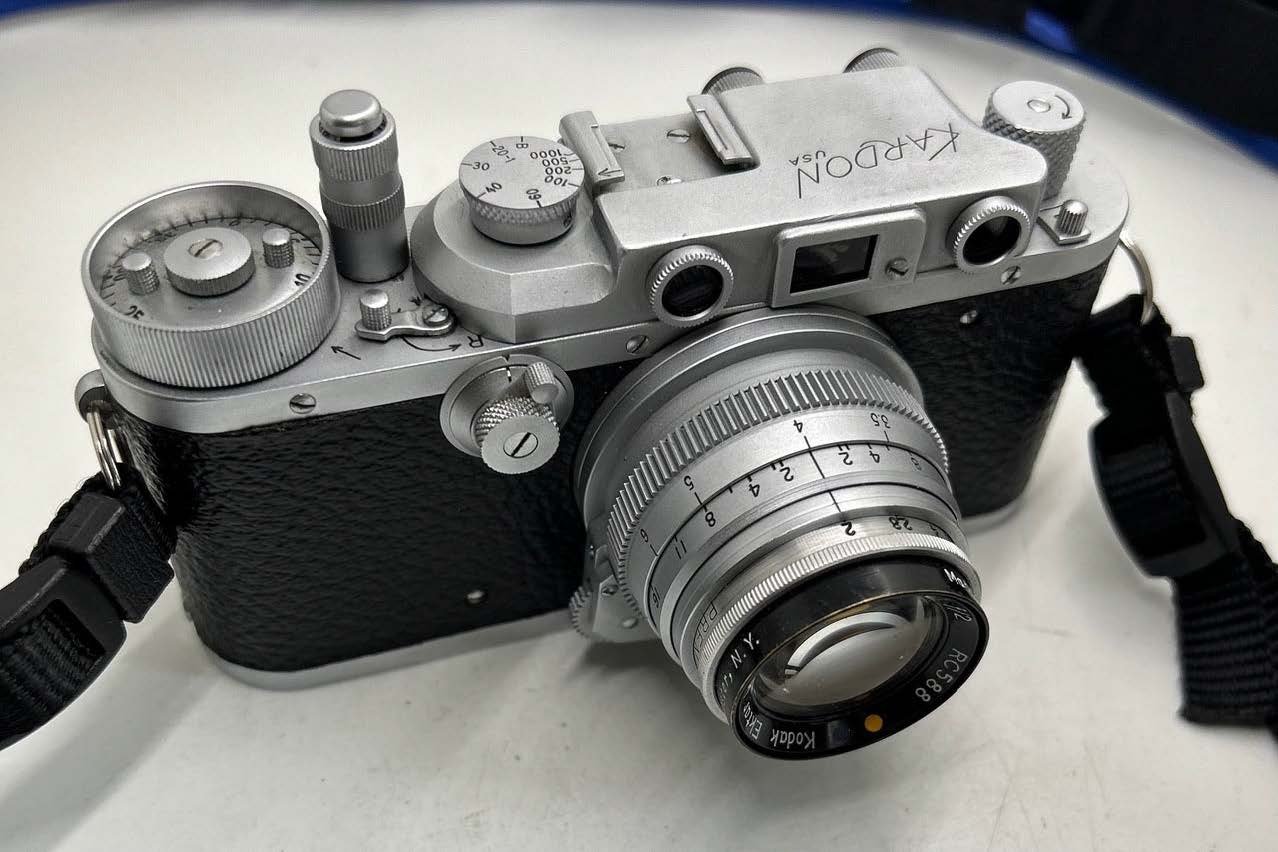
PHSNE member Mark Kronquist, also a member of the Leica Society International (formerly LHSA), submitted the following article about the Kardon based on a presentation he made to the Leica Society.
During World War II, the Allies were cut off from German and European cameras, binoculars, and other high quality photographic and optical equipment. The US Government seized the Leitz New York assets and instructed them to produce a US-made Leica. By 1943, it became apparent that they were not able to do so.
In stepped Peter Kardon, a naturalized US citizen originally from Odessa, Russia. Kardon already had achieved a reasonable degree of business success as president of the Premier Instrument Corporation. According to one photographic historian, the personal risks Kardon took for the creation and manufacture of the Kardon camera were motivated by his desire to assist the nation that took him in as an immigrant in 1939 and that enabled him some degree of success for him and his family. In other words, it was his inspired payback for his realization of the American Dream.
As a subcontractor to E. Leitz, Kardon eventually produced the first “American-Made” Leica Camera, as it was called. The contract called for a production run of 6000 American-made Leica IIIa models, utilizing production equipment from E. Leitz.
The effort immediately encountered two major obstacles. First, the production equipment provided by E. Leitz was in such poor condition it could neither be used nor serviced. Second, detailed analysis of the IIIa showed that its design didn’t allow for mass manufacture. Rather, each piece required hand adjustments from experienced craftspersons. This would not do for mass manufacture or for easy repair in the field. So, Kardon embarked on the task of designing a new camera whose interchangeable parts would meet these requirements.
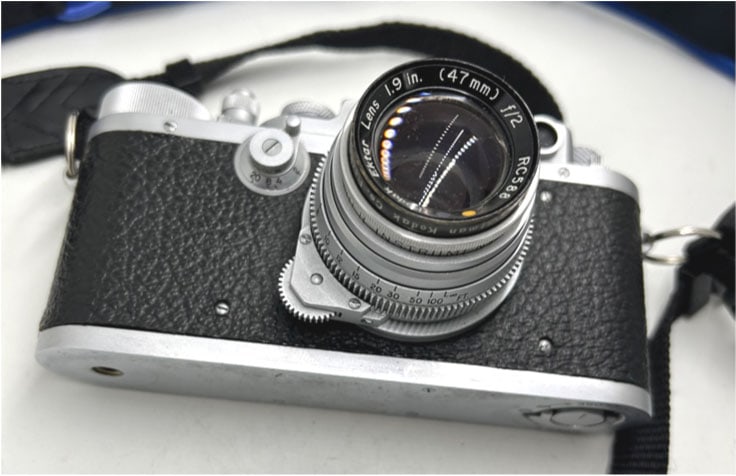
This improved design capable of mass manufacture is the first significant contribution by Kardon to the photographic world. The effort involved the talent of many Kardon family members (Leonard, Bernard, Nathan, and Frances Kardon, and son-in-law Irving Gross). They collectively succeeded in designing and producing a Leica IIIa-based camera of easier assembly and service than that of Leitz in Germany. The completed camera featured a seasoned and well regarded 47mm f/2 Ektar lens of American design and manufactured by Kodak, set upon a Kardon designed and assembled lens mount. It was an improved Leica of American manufacture.
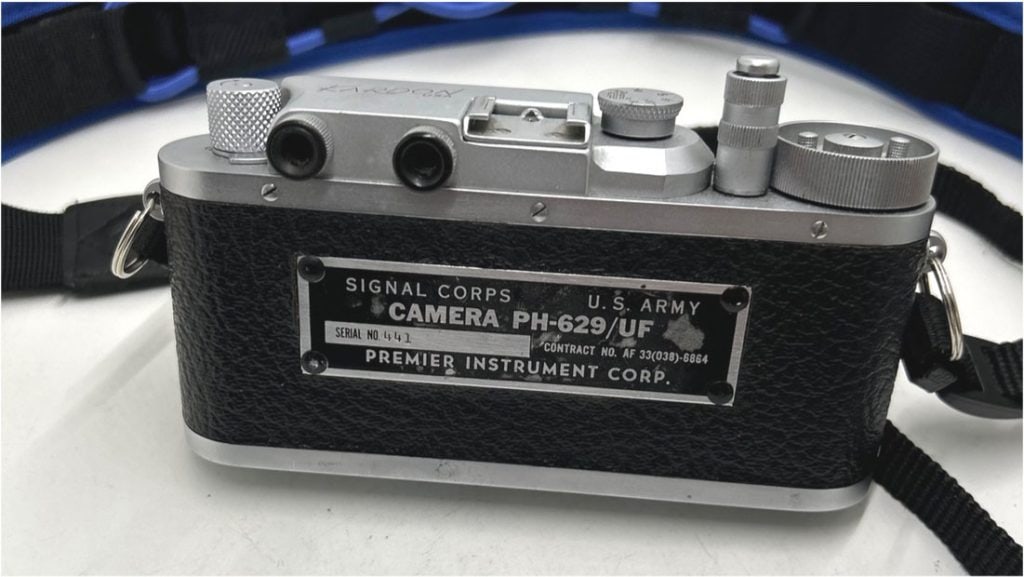
The Kardon was perfected just in time for the end of the war. Leica cameras started reappearing on the American market, dooming the Kardon (and British Reid Leica copy). The US Signal Corps stepped in and purchased a few and some were sold on the civilian market. Very few survive, let alone with the original case.
However, the technical success was not met with business success. Kardon had only recently delivered production samples for the government when his contact was canceled upon the victory of Allied Forces over Japan. It was financial disaster for the company, only having recouped 10 percent of its total investment.
What the heck…
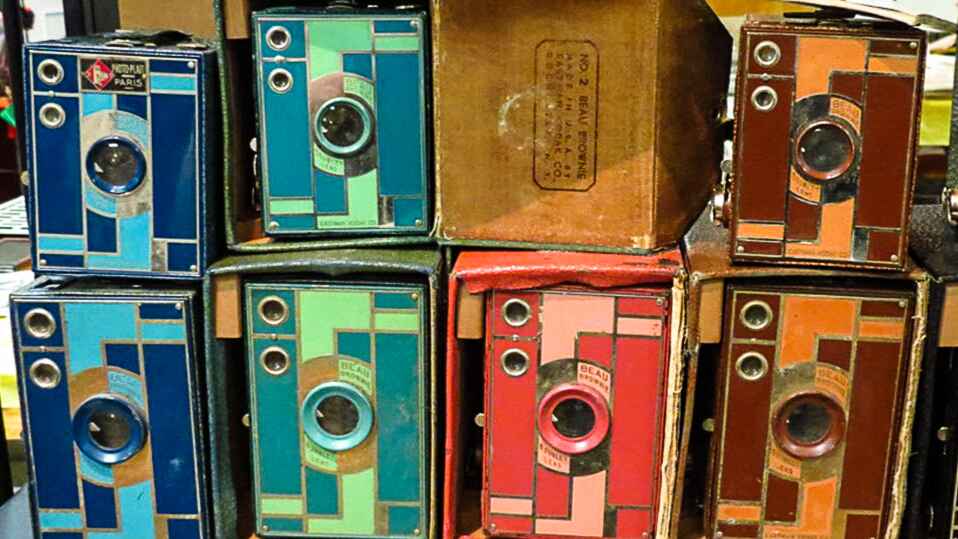
Are Those Even Cameras?!
Join the PHSNE Newsletter and learn more about photographic history and preservation. Already an expert? Come and share your collections and knowledge as we celebrate the history and advancement of photography.