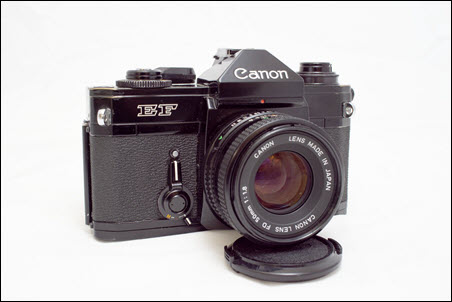
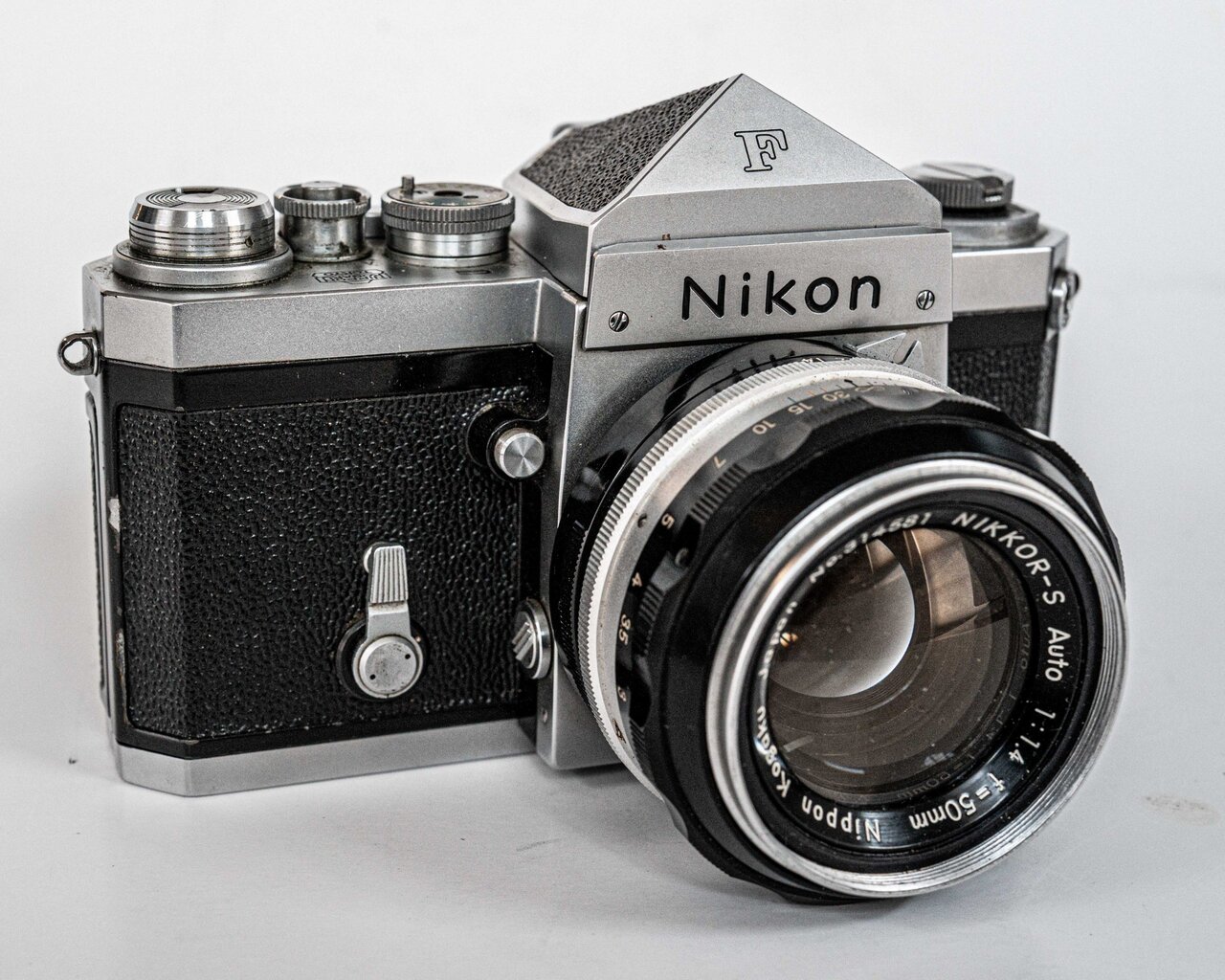
Photographs by PHSNE Treasurer Sid Chatterjee
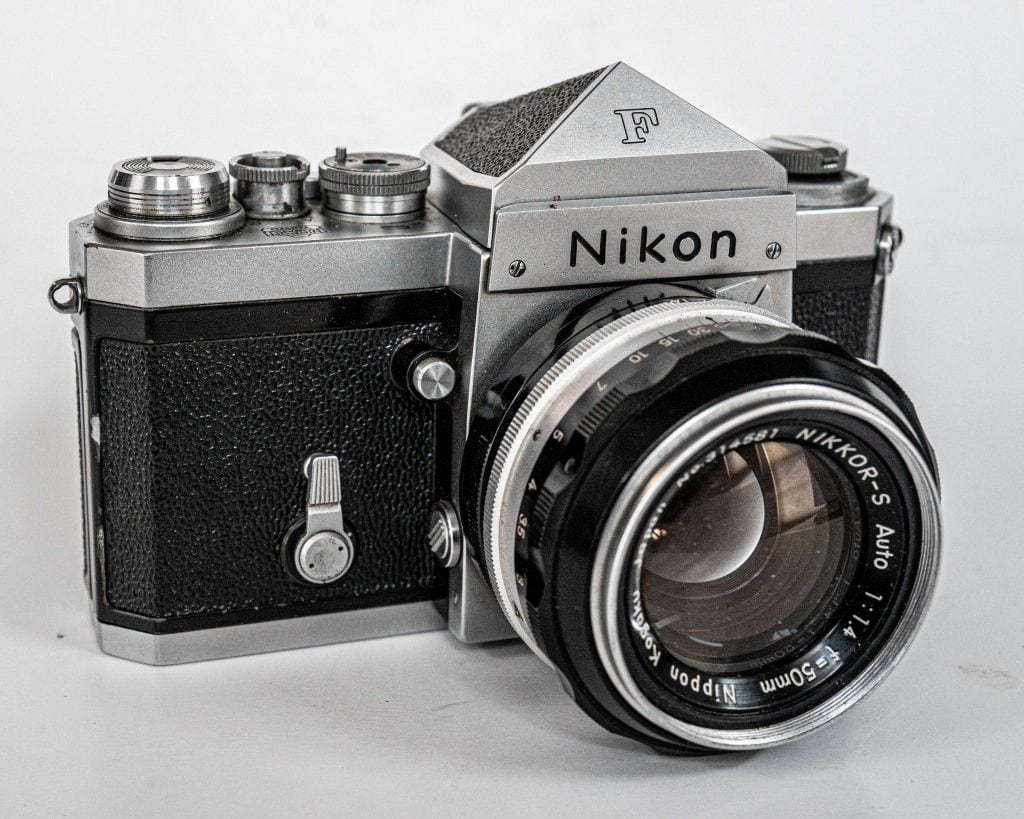
Introduced in 1959 by the Nippon Kogaku Company, the Nikon F came with “a comprehensive range of high quality lenses and accessories. During its lifespan, new items were continuously added, comprising bulk film magazine, electrical motor drive, viewfinders, focusing screens, close-up and scientific attachments, flash units, remote controls, and even a Polaroid back, the Speed Magny, as well as a wide variety of exposure meters, both separately available or as part of the finder prism, the latest of those being TTL meters, known as the Photomic” (https://camera-wiki.org/wiki/Nikon_F).
Initially, Nippon Kogaku was producing rangefinders, but when they recognized that the SLR format was the wave of the future, they developed the Nikon F system. The Nikon F wasn’t the first Japanese 35mm SLR, and probably not the best, but given the company’s reputation, it was quite successful.
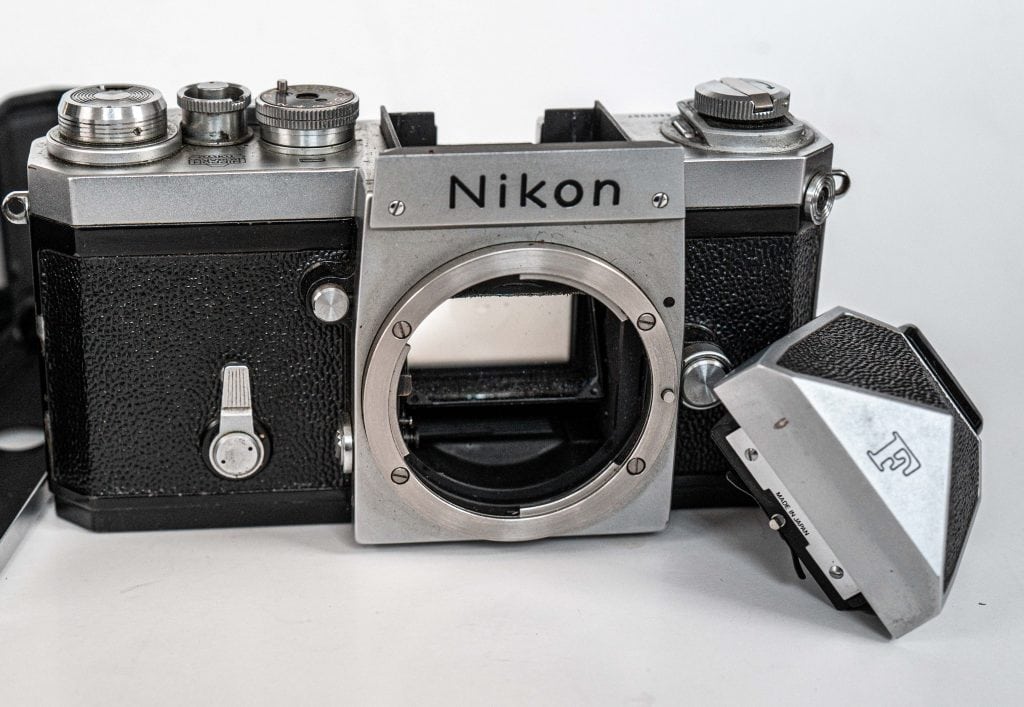
Viewfinder interchangeable with light meter
There was a certain amount of patchwork involved. The body was built from the rangefinder. The finder attachment was similar to that of the Exakta Varex. “As it turned out, the system was not the best choice and it has been the cause for several afterthoughts. The most important attachment, however, is the lens. Nippon Kogaku developed a bayonet mount still found on their digital cameras. It is made of stainless steel and just sufficiently wide to accept all internal connections that have been added ever since its inception.”
The placement of the exposure meter was problematic, and camera manufacturers approached it differently. “Connecting the meter to the shutter speed dial was obvious, but including the aperture ring was not so clear, most relied on manually transferring the meter reading to the lens aperture ring. The Nikon Selenium meter connects to the shutter speed dial, and the reading must be transferred manually. It is attached to the nameplate in front of the finder, surely looked upon as a temporary solution.”
The Phtomic CdS meter, introduced in 1962, dealt with the problem by linking meters to the lens with “an external fork on the aperture ring and a pin reaching down into it from the meter above.” It was sturdy and durable, though far from ideal. This system prevailed for decades but was rather clumsy and far from perfect.
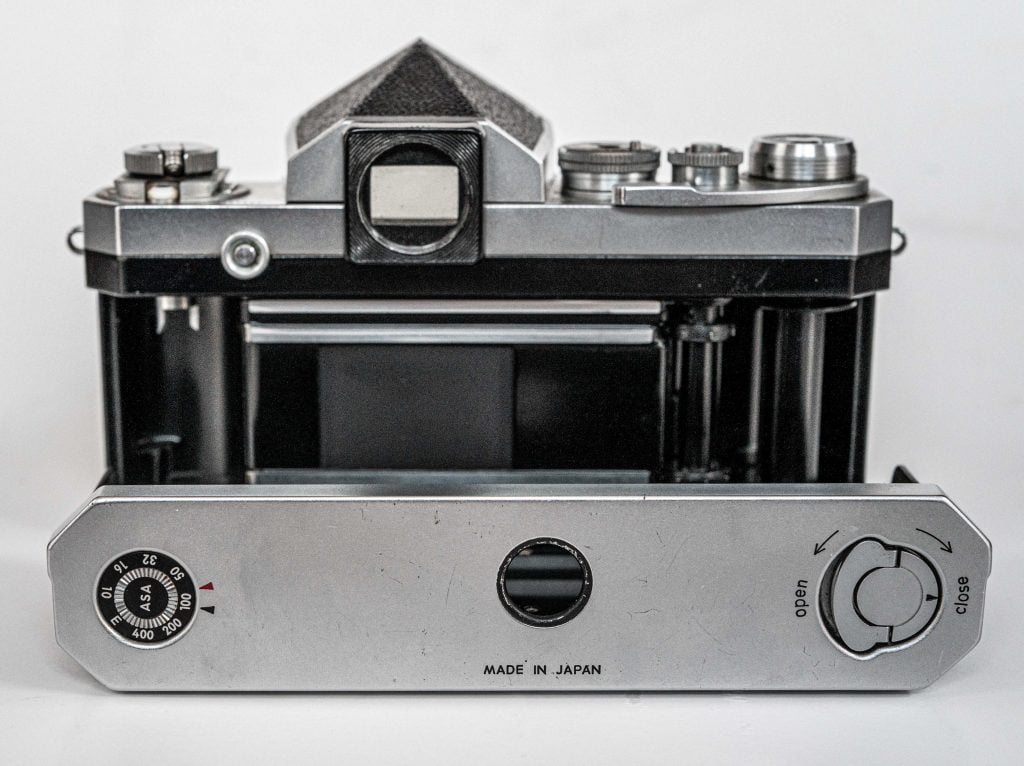
Though “sturdy and reliable,” the Nikon F is difficult to use. The unhinged back must be removed to change the film, and the detachable finder places the flash hot shoe “at the side, requiring special attachments.”
The iconic Nikon F, like the one photographed, along with its long list of successors, will be available for viewing and purchase at Photographica 93, PHSNE’s annual camera show, which will take place on Saturday, April 25, 2026 at Newton North High School.
What the heck…
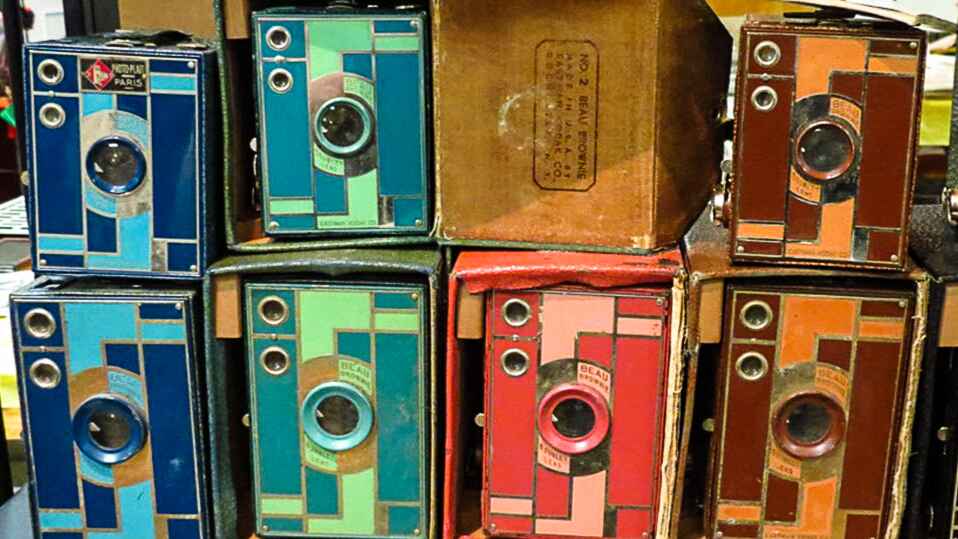
Are Those Even Cameras?!
Join the PHSNE Newsletter and learn more about photographic history and preservation. Already an expert? Come and share your collections and knowledge as we celebrate the history and advancement of photography.