Little is known about Franklin Eaton, the photographer we’re featuring this month, other than that he resided and worked in Maine. The University of Maine has a collection of 394 of his photographs in their digital archives, mostly from the late 1940s. Their catalog offers no details and we found no listings in online newspaper and genealogy databases. The sheer volume of Maine images suggests an affection for the state—the beauty of its seasons, historic sites, and diverse landscapes.
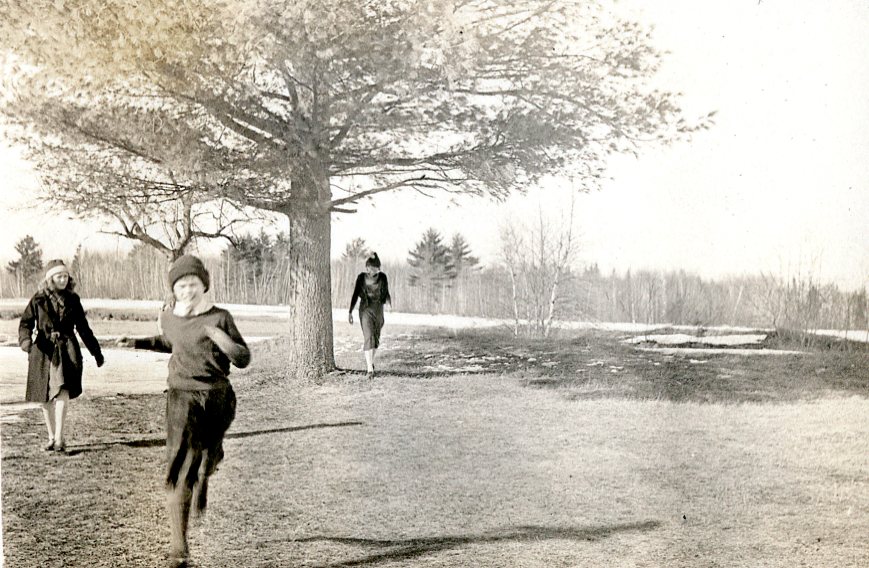
This photograph of an early spring day was shot by Eaton near Kenduskeag, Maine. The caption reads “Spring Fever, Mar. 31” but no year is noted. The image captures the feeling of excitement one feels when the winter weather starts to give way to warmer temperatures, even if just for a day. There’s still snow on the ground as the sun breaks through the clouds, casting long shadows from the three subjects. The child in the foreground runs toward Eaton, conveying a sense of energetic joy.
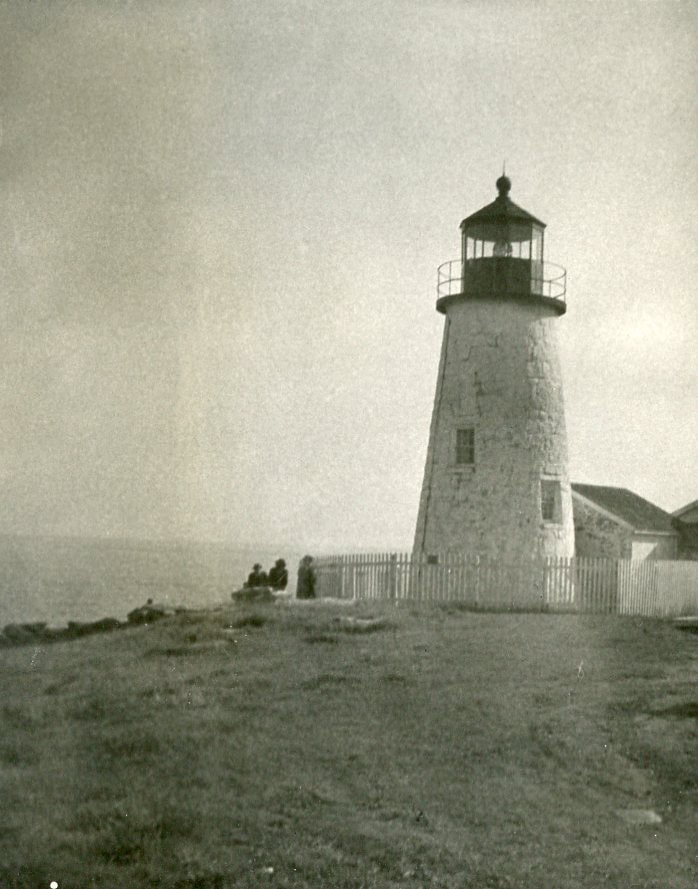
Eaton took this image of the Pemaquid Point Lighthouse in Bristol, Maine sometime in 1949. This structure, completed in 1835, was actually the second lighthouse in its place. The one originally built in 1827 was poorly constructed and needed to be replaced shortly thereafter. The Pemaquid Point Light is known for as the first in Maine to be automated when its keeper was permanently removed in 1934.
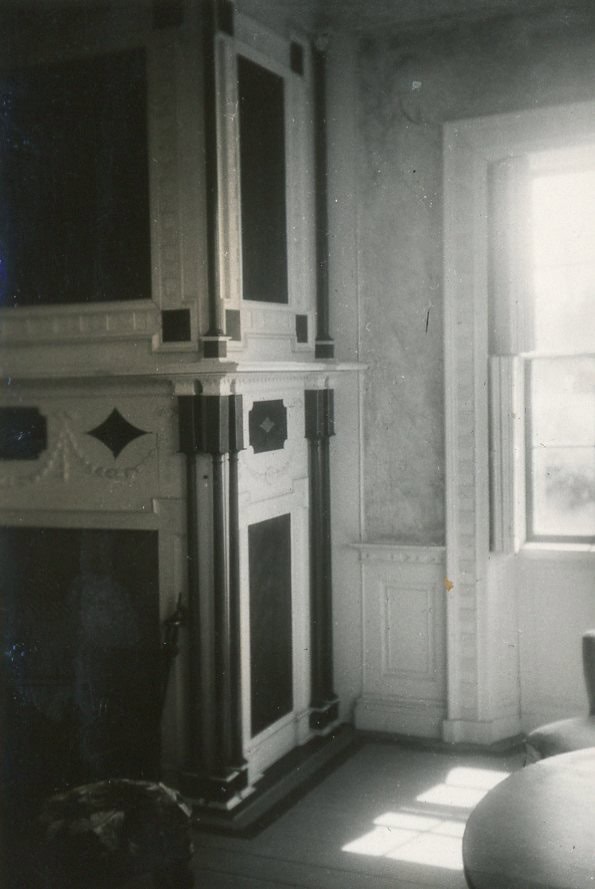
Located in Columbia Falls, Maine, the Ruggles House is known as one of the finest examples of Federal architecture in northern New England. The original owner, Judge Thomas Ruggles, died in 1820, the same year the house was completed. His family continued to live in the house for the next 100 years, until his granddaughter Lizzie passed in 1920. At that point, the house was in a state of disrepair. But in 1921, Mary Ruggles Chandler, great-granddaughter of Thomas, joined forces with other grandchildren to save the home. By 1922, the Ruggles Historical was formed, but the restoration wasn’t completed until 30 years later. Starting in 1951, the home has been open to the public every summer (except in 2020 during the height of the pandemic).
This Eaton photo is dated from 1949, which means the restoration would have still been in progress. One might wonder how Ruggles got access to the home during that time. He clearly had an appreciation for the ornate woodwork surrounding the fireplace and the light pouring in through the window.
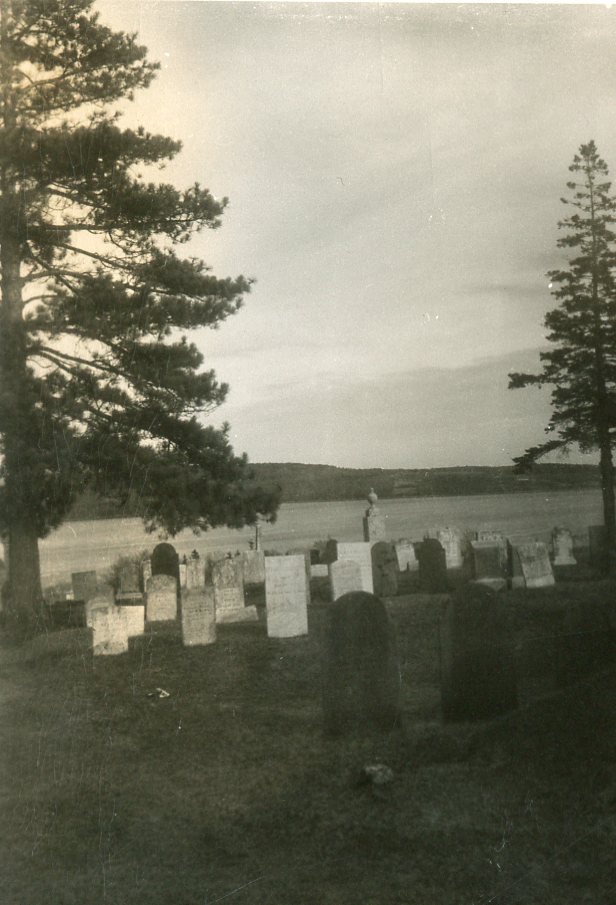
This photograph of Sandy Point Cemetery is dated March 31, 1949. It’s part of a series of images taken in locations leading from Hampden to Searsport, Maine. The headstones, seemingly random in their placement, overlook Penobscot Bay—a beautiful setting for a final resting place. Cemeteries and burial grounds show up a few times in Eaton’s work, suggesting an interest in their graphic nature set against the surrounding natural landscapes.
This rest of this collection of Eaton’s can be found here.
Sources:
https://digitalcommons.library.umaine.edu/spec_photos/3264/
https://lighthousefoundation.org/lighthouses/pemaquid-point-light/
https://digitalcommons.library.umaine.edu/spec_photos/2766
https://digitalcommons.library.umaine.edu/spec_photos/2809
https://digitalcommons.library.umaine.edu/spec_photos/2763/
What the heck…

Are Those Even Cameras?!
Join the PHSNE Newsletter and learn more about photographic history and preservation. Already an expert? Come and share your collections and knowledge as we celebrate the history and advancement of photography.